
How AI Consulting Services Turn Messy Workflows Into Measurable Results
Most companies do not have an AI problem. They have a process problem that AI suddenly makes visible. When a team brings in AI consulting services, the first useful outcome is rarely a model or a chatbot. It is an honest map of where work actually slows down, where data gets re-typed, and where decisions wait on a human who is already overloaded. That map is what makes later automation worth paying for.
This article looks at what good AI consulting actually involves, how to tell a real engagement from a demo-heavy sales cycle, and what a practical rollout looks like from audit to production.
What AI Consulting Services Actually Deliver
The phrase covers a wide range of work, so it helps to separate the deliverables from the marketing. In practice, a serious engagement produces four things: a workflow audit, a prioritized list of automation candidates, a working prototype or pilot, and a measurement plan that survives after the consultants leave.
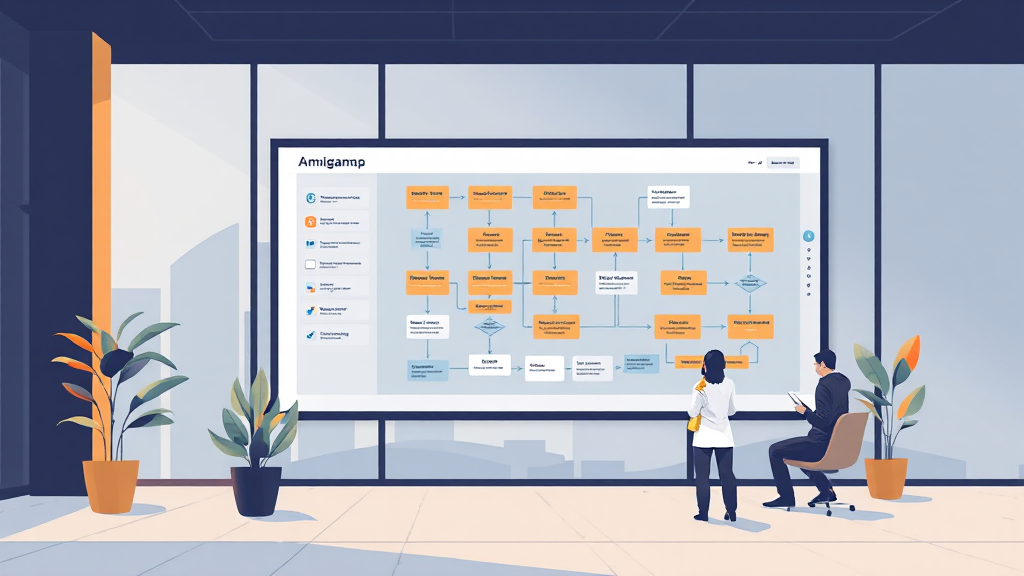
The audit stage matters more than most buyers expect. Before anyone trains a model, a consultant should trace how a request enters the business, who touches it, what systems it passes through, and where it exits. For a support team, that might mean following a single ticket from inbox to resolution. For an operations team, it might mean tracking a purchase order from intake to approval. The goal is to find the steps that are repetitive, rule-based, or bottlenecked on reading and summarizing text.
Prioritization comes next. Not every slow process deserves automation. A good consultant ranks candidates by frequency, error cost, data availability, and how painful the current process is for the people running it. High-volume, low-ambiguity tasks usually win first because they produce fast, visible wins that build internal trust.
The pilot phase is where theory meets reality. A useful pilot runs on real data, in the real tool stack, with real edge cases. If a vendor only shows you a clean demo with perfect inputs, that is a warning sign. Production data is messy, and the pilot should prove the system can handle that mess without creating new review work for your team.
Why Workflow Audits Come Before Model Selection
Teams often start with the model: which large language model is best, which vendor has the strongest benchmark scores, which platform integrates with everything. That is backward. The model is the least differentiated part of most AI projects. The workflow is where the value and the risk live.
A workflow audit answers questions that model selection cannot. Where does the data come from, and is it clean enough to use? Who is accountable when the system makes a wrong call? What is the cost of a false positive versus a false negative? How will the team know the automation is working six months from now?
These questions sound bureaucratic, but they determine whether a project ships or stalls. A support automation that drafts replies is low risk because a human still reviews the output. A finance automation that releases payments without review is high risk and needs different controls. The same underlying technology can be safe in one context and reckless in another. The audit is what distinguishes the two.
It also prevents the most common failure mode: automating a process that should have been simplified first. If a form collects duplicate information across three systems, adding AI to reconcile it is worse than removing the duplication. Good consultants look for the simpler fix before reaching for the model.
Where AI Consulting Creates Measurable Value
The clearest wins tend to cluster in a few areas. Each has a natural measurement, which is why they survive scrutiny from finance and operations leaders.
Support and service operations. Classifying incoming requests, drafting first responses, and summarizing long threads are all tasks where AI can reduce handling time. The metric is straightforward: time to first response, resolution time, and the percentage of tickets that need escalation. A well-run pilot usually shows improvement within weeks because the volume is high enough to measure.
Research and analysis. Teams that read large volumes of documents, reports, or filings spend enormous time extracting and comparing information. AI can summarize, tag, and surface relevant passages, leaving the analyst to make the judgment call. The metric is hours saved per analyst per week, plus a quality check on whether the extracted information is accurate.
Internal knowledge. Most organizations have answers scattered across wikis, tickets, and chat history. A retrieval-based assistant can shorten the time it takes a new hire or a support agent to find the right answer. The metric is search success rate and time to find a correct answer.
Sales and back-office workflows. Lead qualification, CRM hygiene, and document preparation are repetitive and rule-heavy, which makes them good candidates. The metric is cycle time and data completeness.
Notice that none of these metrics require a breakthrough in AI capability. They require a clear process, a defined baseline, and a controlled rollout. That is the consulting work.
How to Evaluate an AI Consulting Partner
Buyers should ask questions that separate practitioners from pitch decks. A few are especially revealing.
Ask how they handle data privacy and where data is processed. Ask what happens when the model is wrong, and who is responsible for catching errors. Ask whether they will run a paid pilot on your data before committing to a larger build. Ask how they measure success and what they do if the pilot fails to hit the target.
Also ask about handover. A consultant who builds a system your team cannot maintain has created a dependency, not a capability. Good engagements include documentation, training, and a clear plan for who owns the system after launch. Some teams prefer a build-and-transfer model; others want ongoing support. Either can work, but it should be explicit from the start.
Finally, look for honesty about limits. AI is good at pattern recognition, summarization, and language tasks. It is unreliable at tasks requiring guaranteed correctness, deep causal reasoning, or access to information it does not have. A partner who acknowledges these limits is more trustworthy than one who promises a universal solution.
A Practical Rollout Sequence
Most successful projects follow a similar arc, even across very different industries.
First, pick one workflow with high volume and low ambiguity. Second, define the baseline metric before any changes. Third, build a small pilot that runs alongside the existing process rather than replacing it. Fourth, review the pilot output with the people who do the work today, because they will spot errors that automated checks miss. Fifth, expand only after the pilot hits its target for a sustained period.
This sequence is deliberately slow at the start and fast later. Teams that skip the baseline cannot prove improvement. Teams that skip the parallel run cannot catch systematic errors. Teams that skip practitioner review often ship something that looks good in a demo and fails in daily use.
The sequence also creates a natural place to stop. If the pilot does not hit its target, the team can pause without having spent a full budget. That is a feature, not a failure. It is better to learn early that a workflow is not ready than to discover it after a large rollout.
Common Mistakes That Sink AI Projects
The same errors appear across industries and company sizes. Automating a broken process is the most common. If the underlying workflow is inconsistent, the AI will learn the inconsistency and amplify it.
Ignoring the people who do the work is another. The staff closest to the process know where the edge cases live. Excluding them from design guarantees resistance and missed requirements.
Over-scoping the first project is a third. A pilot that tries to solve five problems at once produces no clear signal about what worked. A narrow pilot with one metric is easier to evaluate and easier to defend internally.
Finally, treating the launch as the finish line. AI systems drift as data changes and business rules evolve. Without monitoring and periodic review, performance quietly degrades. A good consultant builds that review into the plan from day one.
FAQ
How long does a typical AI consulting engagement take?
A focused workflow audit usually takes two to four weeks. A pilot on a single workflow typically runs four to eight weeks, depending on data readiness and integration complexity. Full rollouts vary widely and should be scoped after the pilot results are known.
Do we need clean data before starting?
Not necessarily. Most organizations have imperfect data. The audit stage identifies which data is usable, which needs cleaning, and which gaps would block a project. Data readiness is a finding, not a prerequisite.
Will AI replace our team?
In most practical deployments, AI handles repetitive steps and leaves judgment, exceptions, and relationship work to people. The realistic outcome is shifting time from manual processing to review and decision-making, not eliminating roles.
How do we measure whether the project succeeded?
Define a baseline metric before the pilot starts. Common choices include handling time, error rate, cycle time, and hours saved per person per week. If the pilot does not move the metric, the project should be revised or stopped.
What is the biggest risk in AI adoption?
Automating a process that should have been simplified first. If the workflow has redundant steps or inconsistent rules, fix those before adding AI. Otherwise the model will scale the existing problem.
The Bottom Line
AI consulting is less about choosing the smartest model and more about understanding how work flows through an organization. The teams that get value are the ones that start with a clear audit, pick a narrow high-volume workflow, measure honestly, and expand only after the pilot proves itself. That approach is unglamorous, but it is the one that produces results that survive contact with real operations.
